
The evidence
Less water, less time, less exposure.
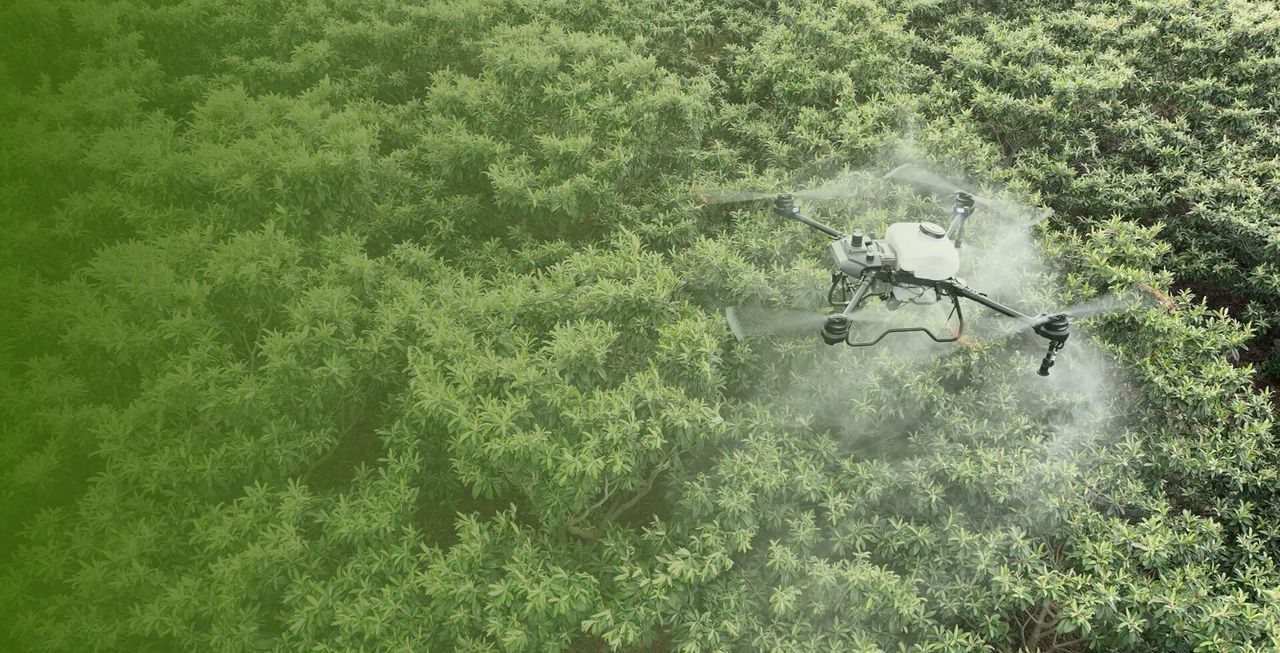
In a 2025 field study, researchers sprayed the same wheat farms by drone and by tractor boom, at the same pesticide dose. The drone used 97% less water and 60% less energy per hectare, and cut spraying time by 70%.
The study
Drone vs tractor boom, per hectare
Four measures from the study, side by side: water, spraying time, emissions and energy.
| Measure | Tractor boom | Drone | Change with the drone |
|---|---|---|---|
| Water per hectare | 300 litres | 10 litres | 97% less |
| Spraying time per hectare | 30 minutes | 9 minutes | 70% less |
| Emissions per hectare | 41.3 kg of CO₂ equivalent | 14.5 kg of CO₂ equivalent | 65% less |
| Energy per hectare | 365 megajoules | 147 megajoules | 60% less |
-
0
people walking through the spray. The pilot stays at the field edge, out of the spray.
-
~30%M
less chemical, thanks to fine centrifugal atomisation.
-
Early morning & late afternoon
flying in the cool, still hours when spraying works best and heat stress on workers is lowest.
These three points are ours, not results from the study. M = the manufacturer’s rating.
Source: Safaeinejad et al., PLOS One (2025), field trials on wheat farms in Lorestan, Iran (doi.org/10.1371/journal.pone.0323779 (opens in a new tab)). A single-site study; results in Ghana will vary by crop and field. We’ll publish our own numbers as our flight log grows.
On the farm
What that means on a farm
Those numbers come from one study. Here is what the Q100P itself brings to your fields.
-
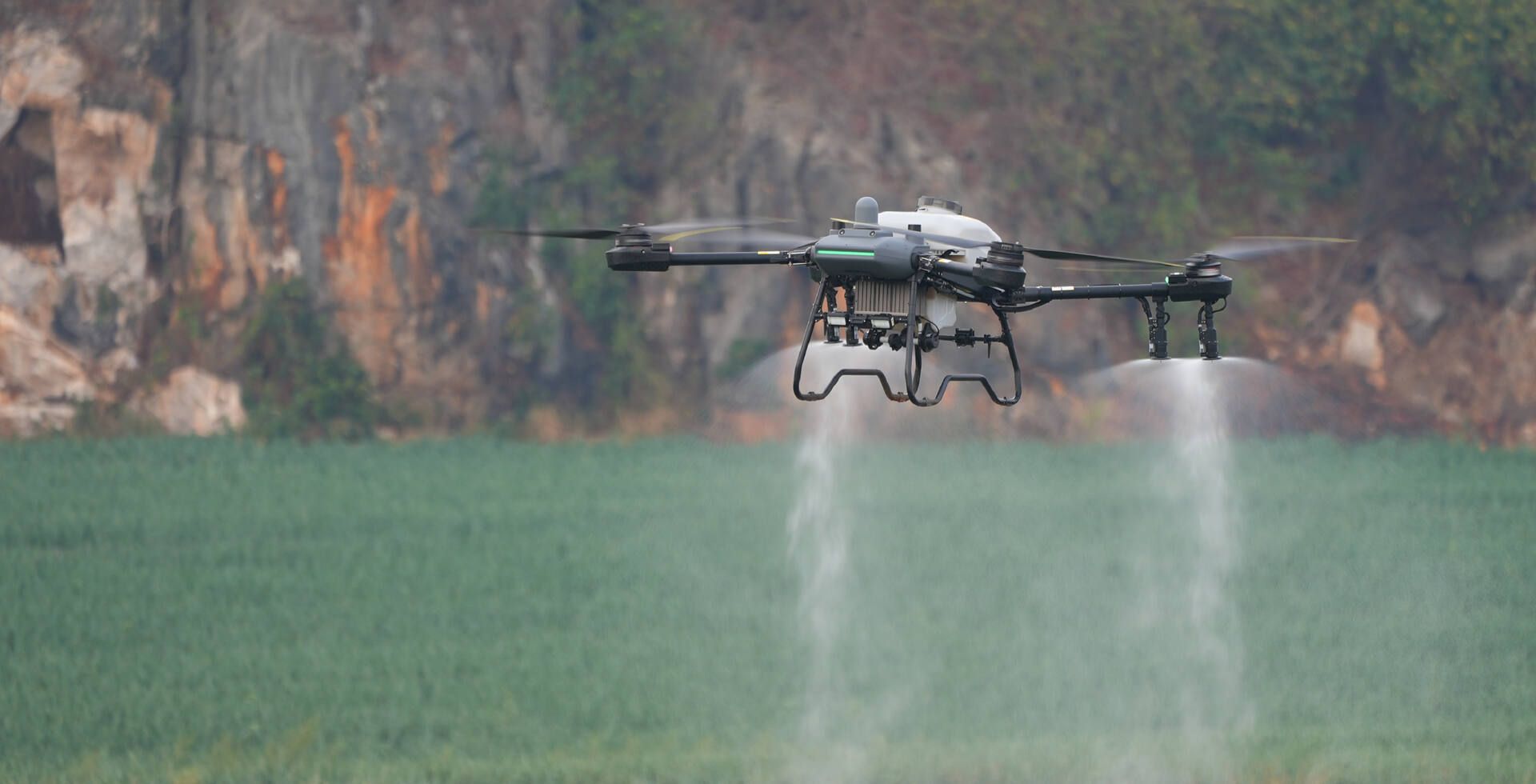
Consistent coverage, at a pace no crew can match on foot
The manufacturer rates the Q100P at up to ~26 ha/hM. Real-world coverage depends on your crop, field shape and dose.
-
Nobody walks through the spray
The pilot stays at the field edge, out of the spray, and keeps the drone in sight.
-
Steady over uneven ground
Terrain following, rated up to 45°M, holds a steady height over uneven ground.
-
Fast charging in the field
A fast charging station keeps batteries cycling and cool all day in the field, and two smart batteries are hot-swapped between flights.
-
RTK precision
RTK positioning keeps flight lines accurate, and two years of RTK service are included.
-
One airframe, four jobs
The same drone sprays, spreads granular inputs, carries loads and surveys fields, so it can stay busy through the growing season.
M = the manufacturer’s rating. Real-world results depend on crop, field shape and dose.
About the study
Where the numbers come from
Safaeinejad et al. compared drone and tractor-boom spraying in field trials on wheat farms in Lorestan, Iran, published in PLOS One in 2025. It is one study at one site, so read it as a guide, not a promise.
-
Same farms, same dose
Both methods sprayed the same herbicide at the same dose per hectare, on the same farms and under the same conditions.
-
A 16 m tractor boom
The conventional sprayer was a 16 m boom, driven by the tractor’s power take-off.
-
A small trial
One 1-hectare plot per sprayer and three repetitions, between April and June 2024.
-
What it leaves out
The time figure is spraying time only: the study counted the same labour for both methods. Battery disposal was not counted.
Reference
Safaeinejad M, Ghasemi-Nejad-Raeini M, Taki M. “Reducing energy and environmental footprint in agriculture: A study on drone spraying vs. conventional methods.” PLOS One 20(6): e0323779 (2025).
Next step
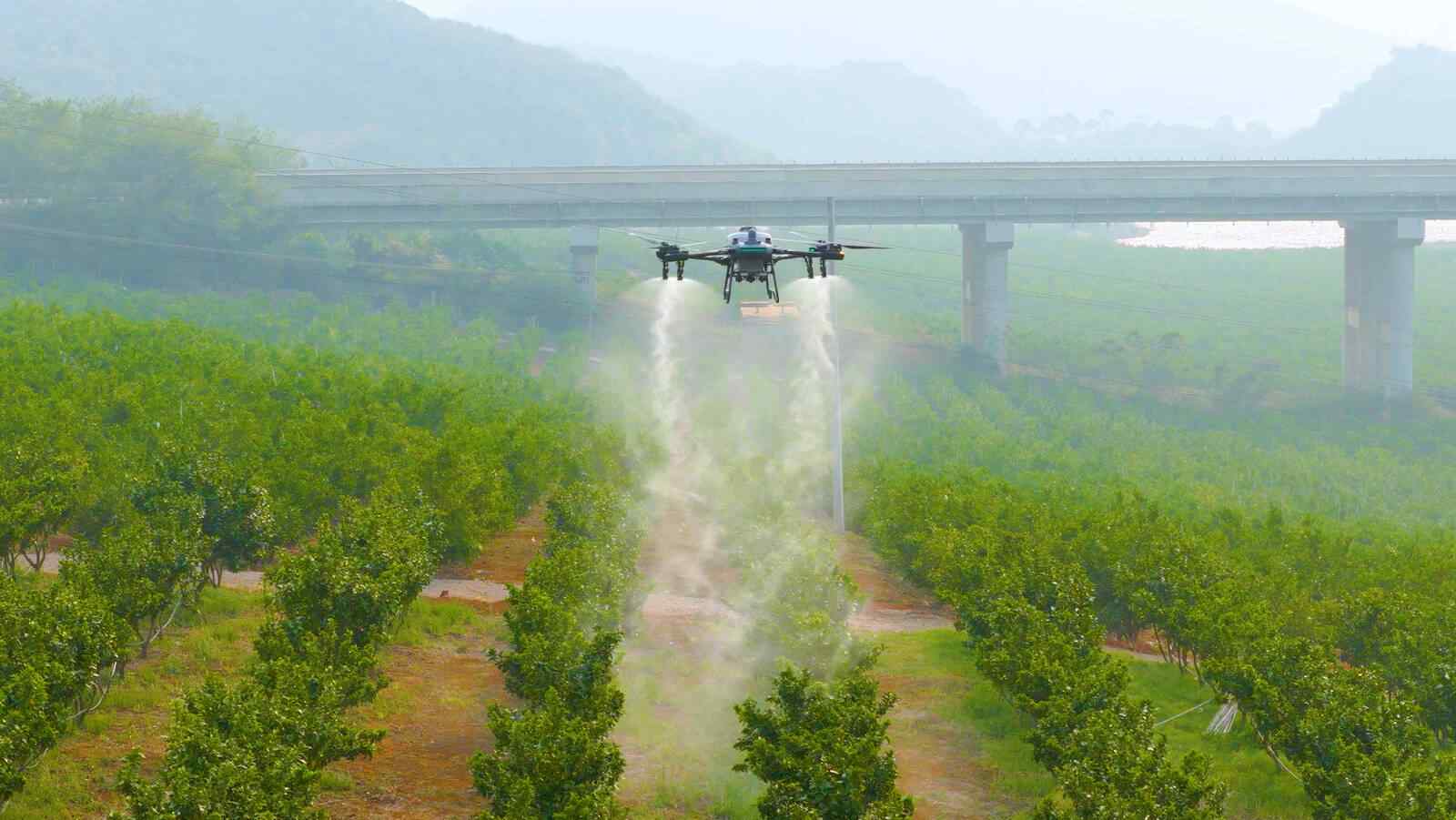
See the Q100P fly.
Request a demo and we’ll arrange a time to show you the Q100P in the field. Pay in full, or spread the cost with interest-free lease-to-own.