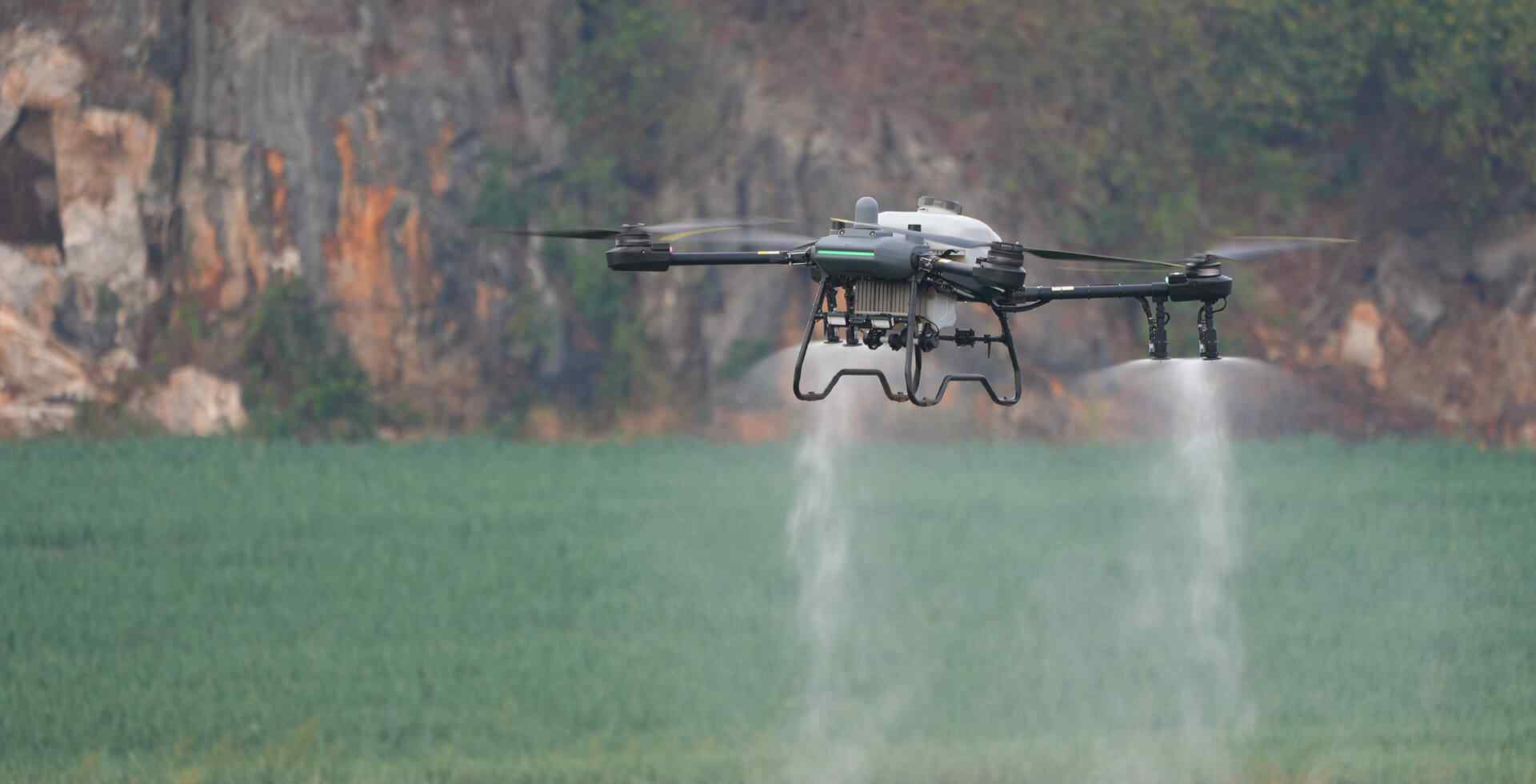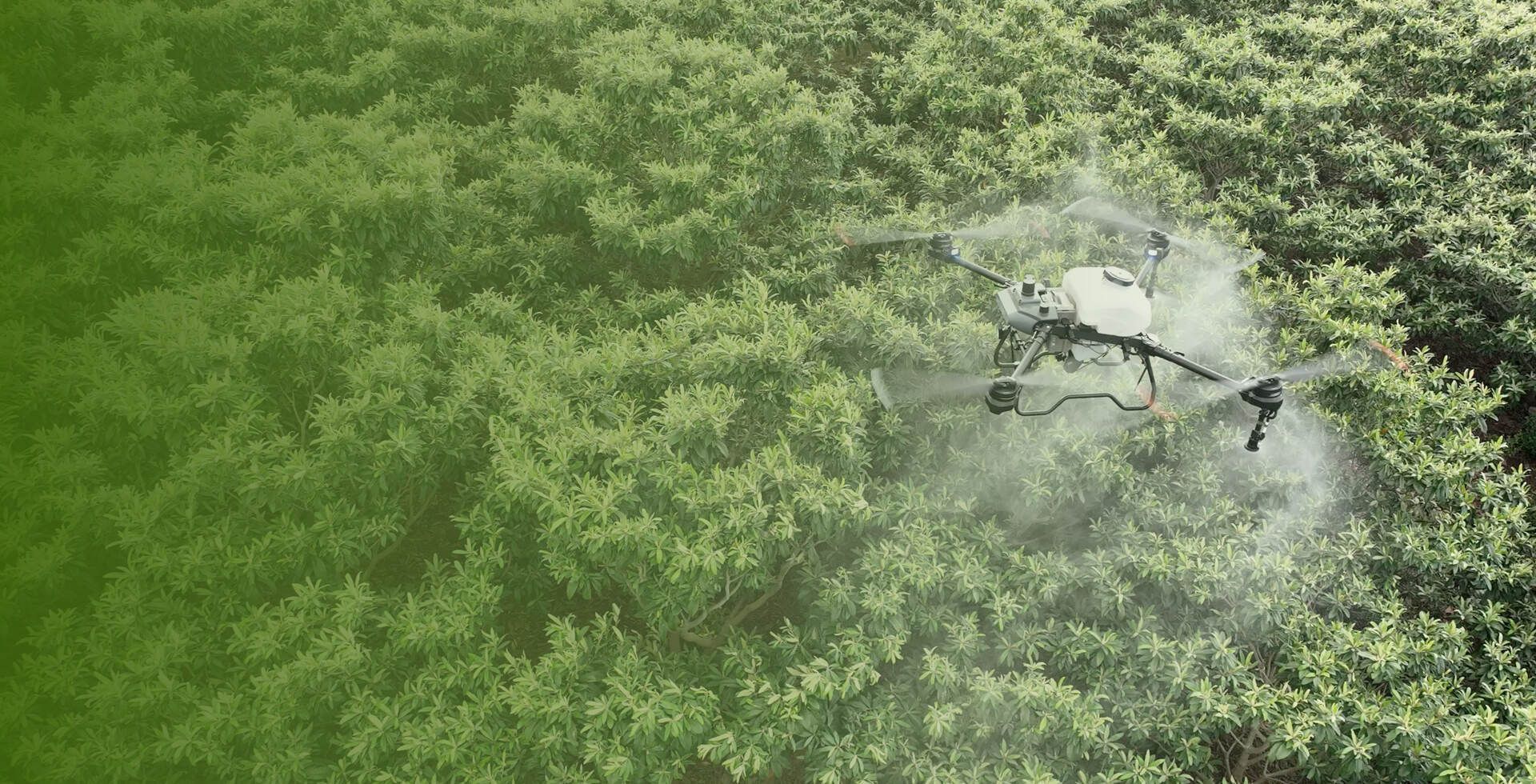
When a peer-reviewed study put drone spraying and tractor-boom spraying side by side on the same farms, we read it closely. Here is what it found, in plain language, and what it can and can’t tell a farmer in Ghana.
The study
In June 2025, researchers at an agricultural university in Iran published their comparison in the journal PLOS One. The trials ran from April to June 2024 on wheat farms in Lorestan province.
Both methods were tested on the same farms, under the same conditions, with the same herbicide at the same dose per hectare. The conventional sprayer was a tractor-mounted boom, 16 metres wide. The drone was a six-rotor sprayer with a 10 L tank.
What they measured
| Per hectare | Tractor boom | Drone | Change |
|---|---|---|---|
| Water | 300 L | 10 L | −97% |
| Spraying time | 30 min | 9 min | −70% |
| Emissions (kg CO2e) | 41.3 | 14.5 | −65% |
| Energy (MJ) | 365 | 147 | −60% |
Some notes on reading the table:
- Water is the water the herbicide was mixed into. The dose was the same, so the drone’s spray was more concentrated.
- Spraying time is how long each sprayer took to cover a hectare. It is not the total labour: the study counted half an hour of work per hectare for both methods.
- Emissions and energy come from a life-cycle assessment of the spraying job. Most of the energy difference is the tractor’s diesel. The drone figures include fuel for a portable generator that charged its batteries in the field, and battery production and charging were the drone’s largest environmental impact.
What it doesn’t tell us
This is one study, and a small one.
- It covers one crop at one site: wheat in Iran. Farms in Ghana grow different crops, on different ground, in a different climate.
- Each sprayer was tested on a one-hectare plot, with three repetitions. The energy and emissions figures are for one working speed.
- The study’s drone had a 10 L tank; the Q100P’s holds 50 L. A different drone will give different numbers.
- Battery disposal was not counted.
So we treat these figures as a useful guide, not a promise. Results on your farm will depend on the crop, the field, the product and the weather.
Our own numbers
We’ll publish our own results as our flight log grows, with the crop and conditions noted, so you can compare like with like.
For more on where drones fit on a farm, see Why drones. For the full specification of our spraying drone, see the Q100P page.
Source
Safaeinejad M, Ghasemi-Nejad-Raeini M, Taki M. Reducing energy and environmental footprint in agriculture: A study on drone spraying vs. conventional methods. PLOS One 20(6): e0323779 (2025). doi.org/10.1371/journal.pone.0323779